
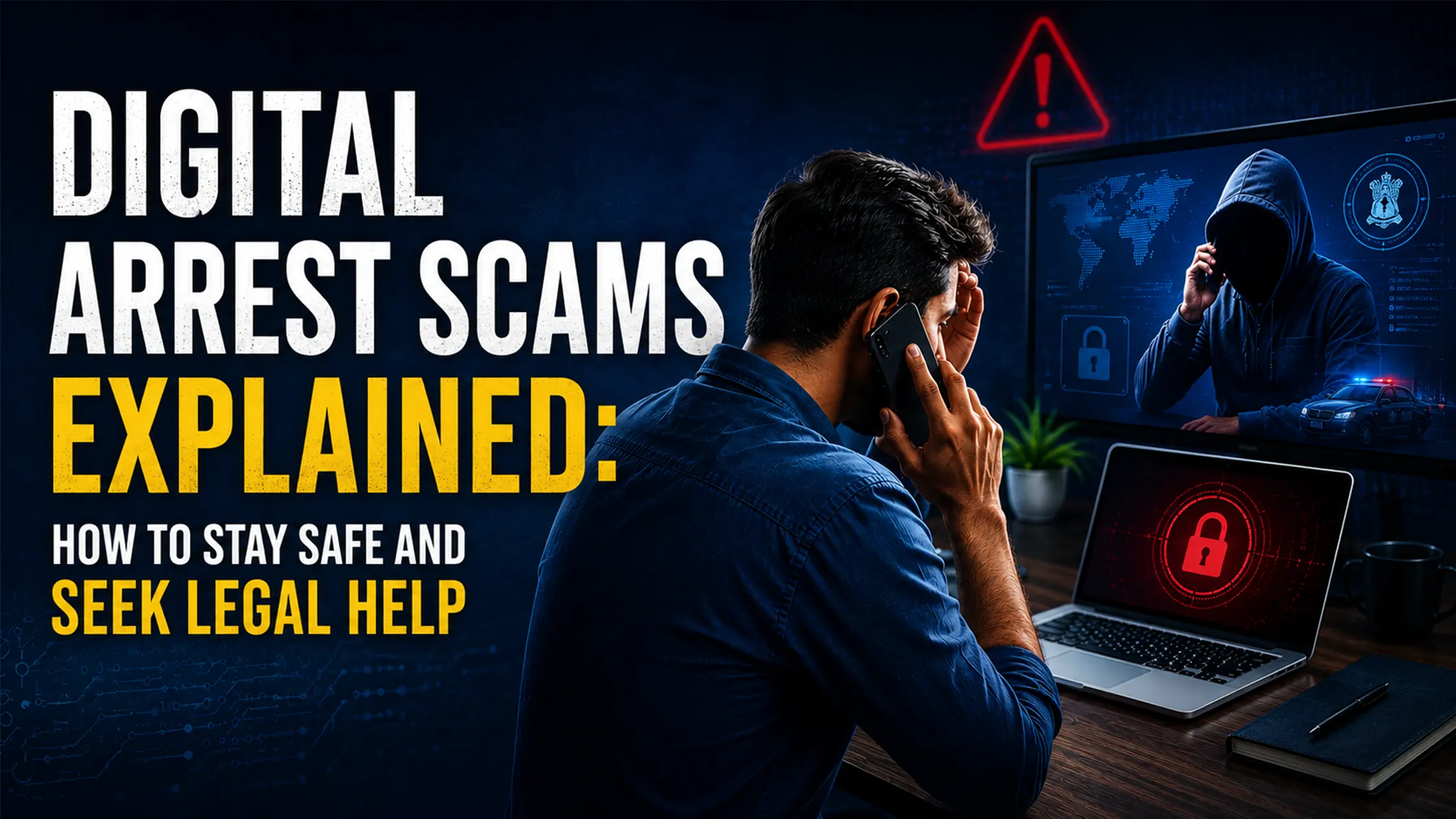
Imagine getting a call from someone who says they’re from the police.
They tell you that your Aadhaar number has been linked to a crime. Or maybe they say a parcel carrying illegal items was booked in your name. They may even claim that your bank account is being investigated for money laundering.
Before you have time to understand what’s happening, they tell you:
“Don’t disconnect the call. You are under digital arrest.”
They may ask you to join a video call, show your identification documents, keep your camera on, or transfer money to a particular account for “verification.”
The whole thing can feel frighteningly real.
But there’s one important thing you should remember:
There is no legitimate “digital arrest” process where a police officer can keep you under arrest simply by making you stay on a video call.
What you’re likely dealing with is a digital arrest scam, a type of cyber fraud designed to scare you into giving away money or sensitive information.
Let’s look at how these scams work, what warning signs you should watch for, and what you can do if you’ve already been targeted.
What Is a Digital Arrest Scam?
A digital arrest scam is basically an impersonation scam.
The person calling you pretends to be someone with authority—perhaps a police officer, government official, court official, bank investigator, or another government representative.
They then create a fake story about you being involved in a crime.
The story could involve:
- Your Aadhaar or PAN
- A parcel supposedly booked in your name
- Money laundering
- A bank account
- A mobile number
- Illegal goods
- A fake court case
- An alleged warrant
Once you’re scared, they start telling you what to do.
And that’s where the real scam begins.
Why Do People Fall for Digital Arrest Scams?
It’s easy to think:
“I would never fall for something like that.”
But these scams aren’t always obvious.
Scammers can be very convincing.
They may know your name, phone number, address, or other personal details. They may use official-looking documents, police uniforms, fake video-call backgrounds, or intimidating language.
They also don’t give you much time to think.
You’re told that you could be arrested, your bank account could be frozen, or your family could become involved.
Fear takes over.
And when you’re frightened, it’s much easier to make a decision without stopping to check whether the caller is actually telling the truth.
How Does a Digital Arrest Scam Usually Happen?
The exact method can vary, but many scams follow a similar pattern.
It Starts With an Unexpected Call
You might receive a call from someone claiming to be from a courier company, police department, telecom company, bank, or government office.
They tell you there is a serious issue involving your identity or phone number.
Then the Story Gets More Serious
You may suddenly be told that your name is connected to a criminal investigation.
The scammer may use words like:
“FIR.”
“Arrest warrant.”
“Money laundering.”
“Narcotics case.”
“Cybercrime.”
The purpose is to make you panic.
You Are Transferred to Another “Officer”
Sometimes another person joins the conversation.
One person may pretend to be from a courier company, while another acts as a police officer.
Having several people involved can make the story seem more believable.
But it’s all part of the setup.
They Move You to a Video Call
This is where the scam can become even more convincing.
You may see someone wearing what looks like a police uniform or sitting in front of a background that looks like a police station.
They may show documents with government logos.
Don’t let this fool you.
Seeing someone on a video call does not prove that they are a police officer.
They Tell You Not to Disconnect
This is one of the biggest warning signs.
You may be told:
“Stay on the call.”
“Don’t tell anyone.”
“Don’t contact your family.”
“If you disconnect, you’ll be arrested.”
The goal is to isolate you so you don’t have a chance to speak to someone who might recognise the scam.
Finally, They Ask for Money or Information
Once you’ve been frightened enough, the scammer may ask you to transfer money.
They may call it:
- Security money
- Verification money
- Bail
- Refundable deposit
- Account verification
- Investigation fee
They may also ask for your OTP, bank details, Aadhaar information, passwords, or access to your phone.
That’s when you need to stop.
Red Flags That Should Immediately Make You Suspicious
Digital arrest scams can look different, but there are certain warning signs that come up again and again.
Someone Threatens You With Immediate Arrest Over a Phone Call
A caller telling you that you’ll be arrested unless you follow their instructions should immediately make you suspicious.
Don’t let the threat rush you into making a payment.
They Tell You to Stay on a Video Call
A genuine legal process isn’t something you should blindly follow because an unknown person tells you to remain on a private video call.
They Ask for an OTP
Never share an OTP with someone who calls you unexpectedly.
It doesn’t matter whether they claim to be from the police, bank, court, or government.
They Demand Money
If someone says you need to transfer money to avoid arrest or “prove your innocence,” stop.
Don’t make the payment simply because you’re scared.
They Don’t Want You to Talk to Anyone
This is a major red flag.
If someone tells you not to speak to your spouse, parents, children, friend, or lawyer, ask yourself why.
Scammers don’t want another person questioning their story.
They Ask You to Install an App
Be particularly careful if you’re asked to install a remote-access or screen-sharing application.
Once someone gets access to your device, they may be able to see sensitive information or interfere with your accounts.
What Should You Do If You Receive a Digital Arrest Call?
The first thing is:
Take a breath.
You don’t have to solve everything in the next 30 seconds.
End the Call
You don’t have to stay connected just because someone claims to be a police officer.
Don’t Send Money
Don’t transfer money to “clear your name” or “complete verification.”
Don’t Share Your OTP
An OTP should remain private.
Don’t Share Your Passwords
No legitimate stranger needs your banking or email password over a phone call.
Don’t Install Anything
If you’re asked to install an unknown app or share your screen, don’t do it.
Verify the Claim Yourself
If the caller says they’re from a police station, bank, or government department, find the organisation’s official contact information yourself.
Don’t use a phone number or website supplied by the caller.
Tell Someone
Call someone you trust and explain what happened.
Sometimes hearing the story out loud is enough to make the strange parts obvious.
What If You’ve Already Sent Money?
Don’t give up.
If you’ve transferred money because of a cyber scam, act as quickly as possible.
Contact your bank or payment provider immediately and explain that the transaction was fraudulent.
For financial cyber fraud in India, you can also report the incident through 1930, the national cybercrime helpline, and the government’s cybercrime reporting system.
The quicker you report a financial fraud, the sooner the relevant authorities and financial institutions can take appropriate steps based on the circumstances.
Keep All the Evidence
Don’t delete the conversation because you’re embarrassed.
Save everything you can.
For example:
- Phone numbers
- WhatsApp messages
- Screenshots
- Emails
- UPI IDs
- Bank account details
- Transaction receipts
- Video-call information
- Documents sent by the scammer
- Voice messages
- Threatening messages
Even details that seem unimportant may become useful later.
What If You Shared Your Aadhaar or PAN Details?
First, don’t panic.
But don’t ignore it either.
What you should do depends on exactly what information you shared and whether it has already been misused.
If you’ve shared banking information, contact your bank.
If you’ve shared passwords, change them immediately.
If you suspect your identity has been misused, consider making a cybercrime report and getting professional advice.
Most importantly, be alert for any unusual activity involving your accounts.
What If You Shared an OTP?
Act immediately.
If the OTP was connected to a banking transaction or another important account, contact the relevant bank or service provider as soon as possible.
Check your account for unauthorised activity and report anything suspicious.
If money has been lost, report the cyber fraud promptly through the appropriate channels, including 1930.
Can a Police Officer Put You Under “Digital Arrest”?
The phrase “digital arrest” is being used by scammers to frighten people.
Being told to remain on a video call does not itself create a lawful arrest.
So if someone says:
“You are under digital arrest. Don’t disconnect.”
don’t automatically believe them.
End the call and independently verify whether there is any genuine legal issue.
If you are genuinely concerned that you may be involved in a legal matter, speak to a qualified lawyer rather than following instructions from an unknown caller.
How Do Scammers Know My Personal Details?
This is one of the things that makes these scams so convincing.
You might think:
“They know my name and Aadhaar details, so they must be genuine.”
Not necessarily.
Personal information can be obtained from many places, including leaked databases, phishing attacks, compromised accounts, social media, or information people have shared online.
Knowing your personal information doesn’t prove that someone is a genuine government official.
Always verify independently.
Why Are Senior Citizens Often Targeted?
Anyone can become a victim of cyber fraud.
However, scammers may deliberately target people who they believe will be more intimidated by someone claiming to be from the police or government.
It’s worth talking to parents and older family members about these scams.
Tell them:
- Police will not make them stay on a random video call to prove their innocence.
- They should never share OTPs.
- They should never transfer money because of a threatening phone call.
- They can hang up and verify the claim.
- They should feel comfortable asking family members for help.
One conversation could potentially prevent a very serious financial loss.
How Can You Protect Yourself?
You don’t need to be a cybersecurity expert.
A few simple habits can make a big difference.
Pause Before You Act
If someone creates a sense of emergency, slow down.
Scammers want you to act immediately.
Verify Independently
Don’t trust the contact details provided by the caller.
Find the official number yourself.
Keep Your OTP Private
Never share OTPs with unexpected callers.
Use Strong Passwords
Use different passwords for important accounts and enable two-factor authentication wherever possible.
Be Careful With Your Documents
Don’t send Aadhaar, PAN, bank statements, or other sensitive documents to unknown people simply because they claim to be officials.
Talk to Your Family
If something feels strange, tell someone.
You don’t have to deal with the situation alone.
What If the Scammer Is Threatening You?
Sometimes digital arrest scams go beyond money.
The caller may threaten you with arrest, public humiliation, legal action, or even contacting your family.
Don’t let the threats push you into paying.
Save the messages and other evidence.
If the threats continue or you believe you’ve been targeted as part of a larger cybercrime, consider speaking with a cyber crime lawyer in Bangalore about your options.
If you are in immediate physical danger, contact the appropriate emergency services or local authorities.
When Should You Contact a Cyber Crime Lawyer?
You don’t need a lawyer every time you receive a suspicious call.
But professional legal advice can be useful if the situation has gone further.
Consider speaking with a cyber crime lawyer in Bangalore if:
- You have lost money
- Your bank account has been compromised
- Your identity has been misused
- You are being threatened or blackmailed
- Someone has filed or threatened a false cybercrime complaint against you
- Your personal information has been misused
- You have received fake legal documents
- You have already reported the fraud but need further guidance
- You have been contacted by authorities regarding a cybercrime investigation
A lawyer can look at what actually happened and help you understand what options may be available.
Why Choose Mishra Cyber Lawyer?
If you’re looking for a cyber crime lawyer in Bangalore, Mishra Cyber Lawyer provides legal assistance for cybercrime and online fraud-related matters.
Every case is different.
Someone who received a suspicious call but didn’t lose any money may need very different advice from someone whose bank account was compromised or whose identity is being misused.
That’s why it’s important to explain the complete situation before deciding what to do next.
You can learn more about Mishra Cyber Lawyer and its services through its official website.
Frequently Asked Questions
What is a digital arrest scam?
A digital arrest scam is a type of cyber fraud where criminals pretend to be police officers, government officials, or other authorities and falsely accuse someone of being involved in a crime. They then use fear and pressure to demand money or personal information.
Is digital arrest a real legal process?
“Digital arrest” is a scam term. Being told to remain on a video call does not itself constitute a lawful arrest.
What should I do if someone says I’m under digital arrest?
Stay calm. Don’t transfer money, share OTPs or passwords, or install unknown applications. End the call and independently verify whether there is any genuine legal issue.
What if I already transferred money?
Contact your bank or payment provider immediately and report the transaction as fraud. You can also report financial cyber fraud through 1930 and the appropriate government cybercrime reporting system.
Can scammers really appear like police officers on video calls?
Yes. Scammers can use uniforms, fake backgrounds, documents, logos, and other tricks to appear convincing. A video call does not prove someone’s identity.
Can scammers use my Aadhaar details against me?
Personal information can be misused in different ways, which is why you should avoid sharing sensitive information unnecessarily. If you believe your identity has been misused, report the issue and seek appropriate advice.
Should I hire a cyber crime lawyer after an online scam?
If you’ve lost money, been threatened, had your identity misused, or become involved in a cybercrime complaint or investigation, speaking with a cyber crime lawyer can help you understand your legal options.
Don’t Let a Scammer’s Fear Control You
The biggest weapon in a digital arrest scam isn’t technology.
It’s fear.
The caller wants you to panic before you have time to think.
So if someone suddenly tells you that you’re involved in a serious crime, don’t immediately believe them. Don’t send money. Don’t share an OTP. Don’t let them keep you isolated on a video call.
Stop.
Verify.
Talk to someone you trust.
And if you’ve already been affected, don’t feel ashamed. These scams are carefully designed to manipulate people.
Report the fraud as quickly as possible, secure your accounts, preserve your evidence, and seek professional help if necessary.
If you need legal guidance regarding a cyber fraud, online scam, identity misuse, or related cybercrime matter in Bangalore, Mishra Cyber Lawyer can help you understand your next steps.
When someone tries to frighten you into making a quick decision, slowing down may be your strongest protection.
Disclaimer: This article is for general informational purposes only and should not be considered legal advice. Cybercrime laws and procedures can vary depending on the circumstances. For advice regarding a specific case, consult a qualified cybercrime lawyer.